Jungfraujoch Tickets

How to visit Jungfraujoch Top of Europe

Jungfraujoch is a high-alpine mountain attraction best known for Europe's highest railway station, glacier views, and a visitor complex built into the snow and ice. This is not a quick viewpoint stop: even the shortest visit involves a long ascent, multiple transfers, thin air at 3,454 m, and a lot of time spent moving between indoor exhibits and outdoor lookouts. The biggest difference between a smooth day and a frustrating one is timing your weather window and first ascent. This guide covers routes, timing, tickets, and how to pace the visit well.

Quick overview: Jungfraujoch at a glance

If you only read one section before booking, make it this one.

  • When to visit: Jungfraujoch is open daily year-round via scheduled mountain rail and gondola connections. The first departures of the day are noticeably calmer than late morning and early afternoon, because tour groups and clear-weather day trippers stack into the same summit window.
  • Getting in: Standard self-guided tickets usually start around CHF 240 from Interlaken, while guided day trips from cities like Zurich cost more because they bundle transport and a guide. Booking ahead matters most in July and August, and on clear-weather mornings when the best departures fill first.
  • How long to allow: Allow 5–7 hours for most visits including the journey up and down. It stretches longer if you stop at viewpoints slowly, eat at the summit, or add the Mönchsjoch Hut walk.
  • What most people miss: The Alpine Sensation tunnel and the brief Eismeer glacier stop are easy to rush past, even though both add real context to the summit experience.
  • Is a guide worth it? A guide is worth it if you are starting in Zurich, Lucerne, or Geneva and want the logistics handled; if you are already staying in the Jungfrau region, a self-guided ticket usually gives you the same core experience for less.

🎟️ Morning slots for Jungfraujoch can sell out several days in advance during July and August. Lock in your visit before the departure you want is gone. See ticket options

Jump to what you need

Where and when to go

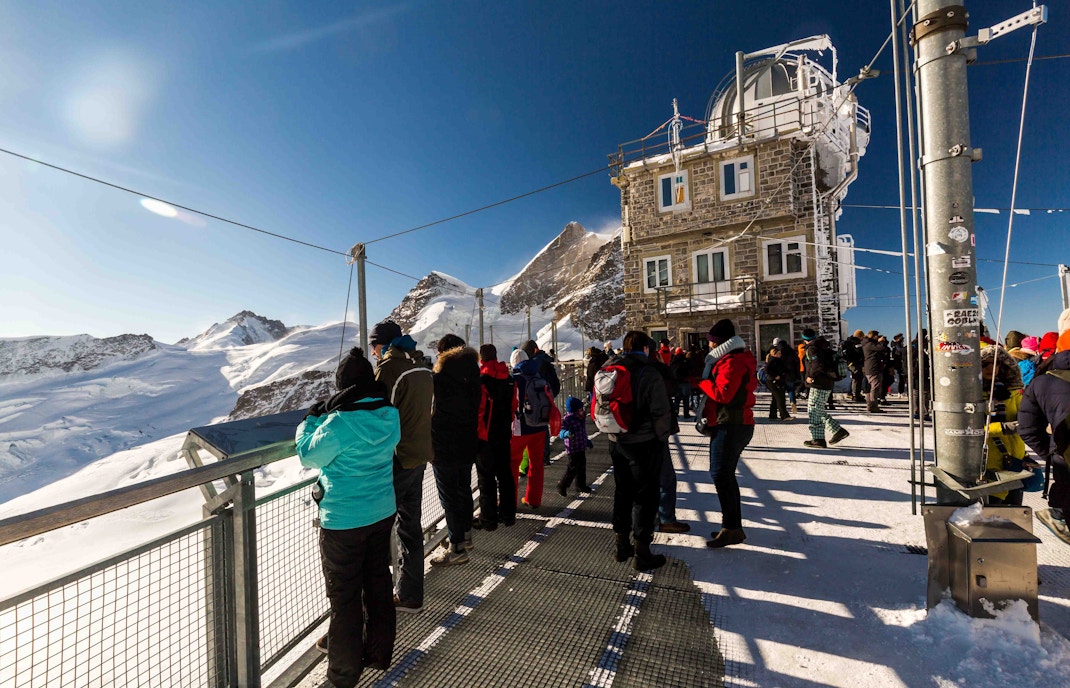
By noon, the Sphinx deck becomes the bottleneck

Late morning is when Jungfraujoch feels most crowded, because nearly every route funnels visitors into the same lift, terrace, and glacier-view windows at once. If the forecast is good, take the earliest ascent you can.

How much time do you need?

Visit typeRouteDurationWalking distanceWhat you get

Highlights only

Eigergletscher/Kleine Scheidegg → Sphinx Observatory → Ice Palace → Plateau → return

3–4 hours

~1 km

You cover the signature viewpoints and indoor exhibits, but the visit feels brisk and leaves little time for a meal or slow photo stops.

Balanced visit

Arrival station → Sphinx Observatory → Alpine Sensation → Ice Palace → Plateau → Lindt stop or restaurant break → return

5–6 hours

~2 km

This gives you the full core Jungfraujoch experience without rushing and adds time for lunch, weather breaks, and the exhibits people usually skim past.

Full exploration

Full summit route + Glacier Plateau + restaurants + Mönchsjoch Hut trail if open → return

6.5–8 hours

~4 km

This is the most rewarding version if visibility is good, but it is also the most physically demanding because the altitude and extra walking catch up with you.

Your route determines your ticket

Local round-trip tickets work best if you're starting in Grindelwald, Interlaken, or Lauterbrunnen. Guided day trips make more sense from Zurich, Lucerne, or Geneva.

✨ Jungfraujoch is easy to reach but not always intuitive to pace well - weather, altitude, and route changes can eat time fast. A guided day trip is most useful if you are starting far away and want the connections, timing, and summit stops handled for you.

Which Jungfraujoch ticket is best for you

Ticket typeWhat's includedBest forPrice fromRecommended experience

Grindelwald to Jungfraujoch

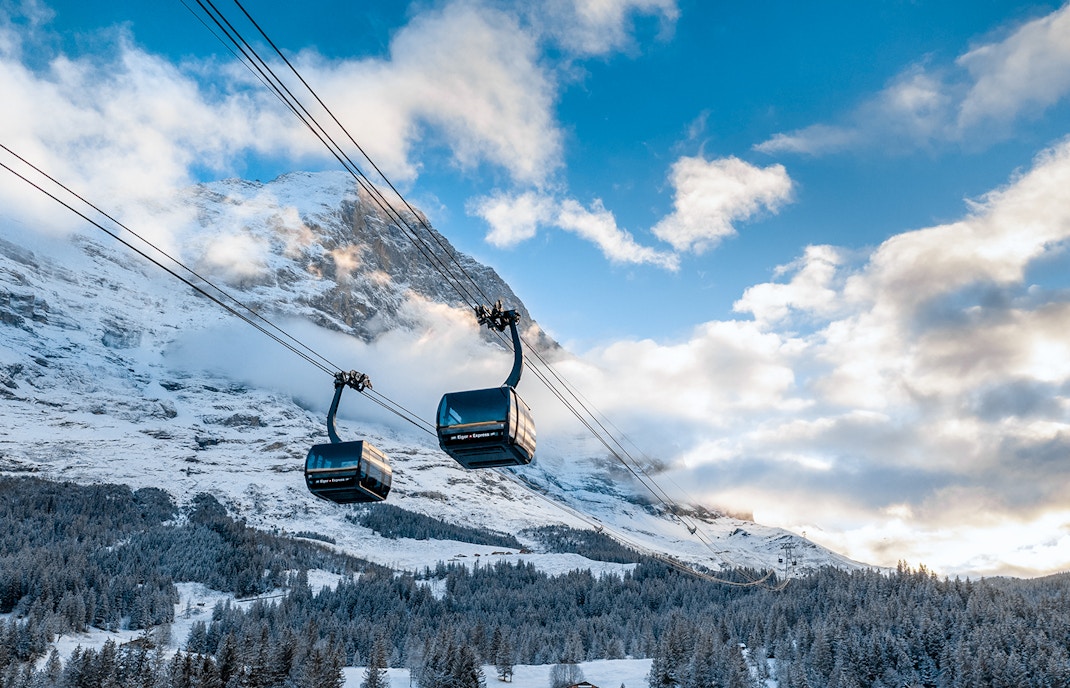
Round-trip Eiger Express gondola + round-trip Jungfrau Railway + reserved return 3 hours after arrival + access to Sphinx Observatory, Ice Palace, Plateau, and Alpine Sensation

A self-guided visit from the closest fast-access base where you want the quickest route up and down

CHF 249Grindelwald to Jungfraujoch

Interlaken to Jungfraujoch

Round-trip train from Interlaken to Grindelwald + Eiger Express gondola + Jungfrau Railway + reserved return + summit attractions

A full self-guided day where you want the classic region gateway without joining a tour

CHF 271Interlaken to Jungfraujoch

Lauterbrunnen to Jungfraujoch

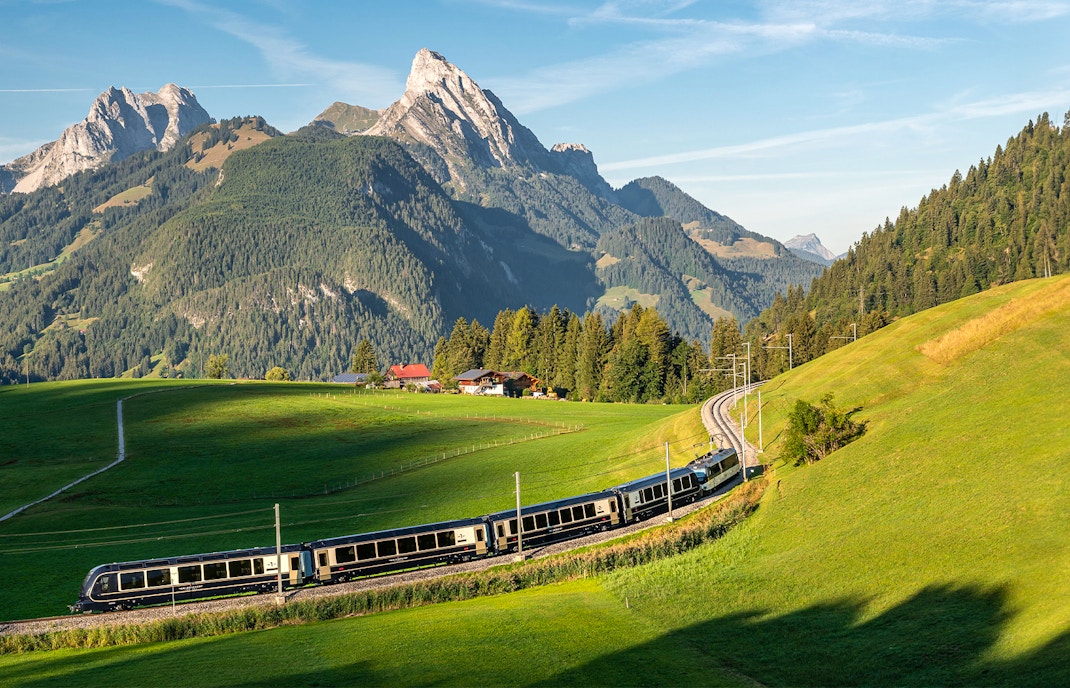
Round-trip rack railway to Kleine Scheidegg + cogwheel train to Jungfraujoch + reserved return + summit attractions

A self-guided visit where you care more about the traditional mountain railway journey than the fastest ascent

CHF 260Lauterbrunnen to Jungfraujoch

Jungfraujoch Guided Day Trip With Transfers

Round-trip coach transfers from Lucerne, Geneva, or Zurich + mountain railway/cable car connections + English-speaking guide + summit attractions

A city-based day trip where you want flexibility on departure city without planning the rail logistics yourself

CHF 279Jungfraujoch Guided Day Trip

Swiss Travel Continuous Pass: Unlimited Travel on Train, Bus & Boat

Unlimited Swiss transport for consecutive days + up to 25% off Jungfraujoch + 500+ museums + mountain excursion discounts

A wider Switzerland itinerary where Jungfraujoch is only one stop and you want transport value across several days

CHF 264Swiss Travel Continuous Pass

Swiss Half Fare Card: 50% Discount on Train, Bus & Boat Tickets for 1 Month

1-month discount card + 50% off eligible train, bus, boat, panoramic train, and mountain railway tickets

A longer stay where you want to buy Jungfraujoch and other mountain tickets separately at reduced rates

CHF 149Swiss Half Fare Card
Most visitors rush past the Alpine Sensation and barely notice Eismeer

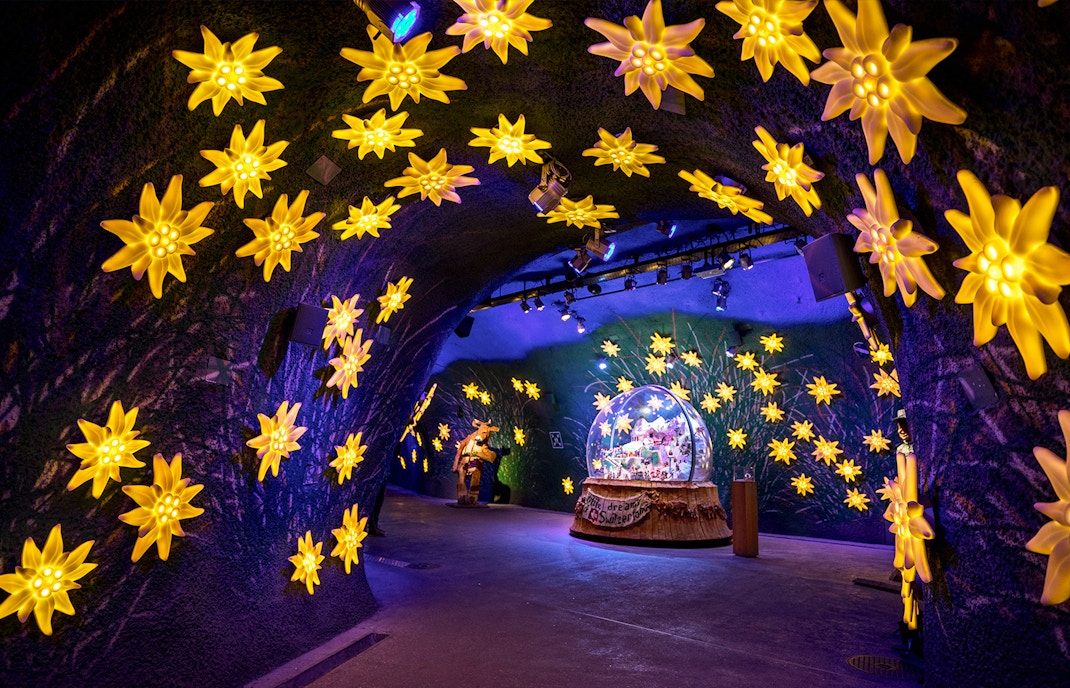
The summit views get the attention, but the railway story tunnel and the short Eismeer glacier stop are what give Jungfraujoch its sense of place. Both are easy to miss because the crowd flow pulls people straight toward the Sphinx and back outside.

How do you get around Jungfraujoch?

What can you see from Jungfraujoch?
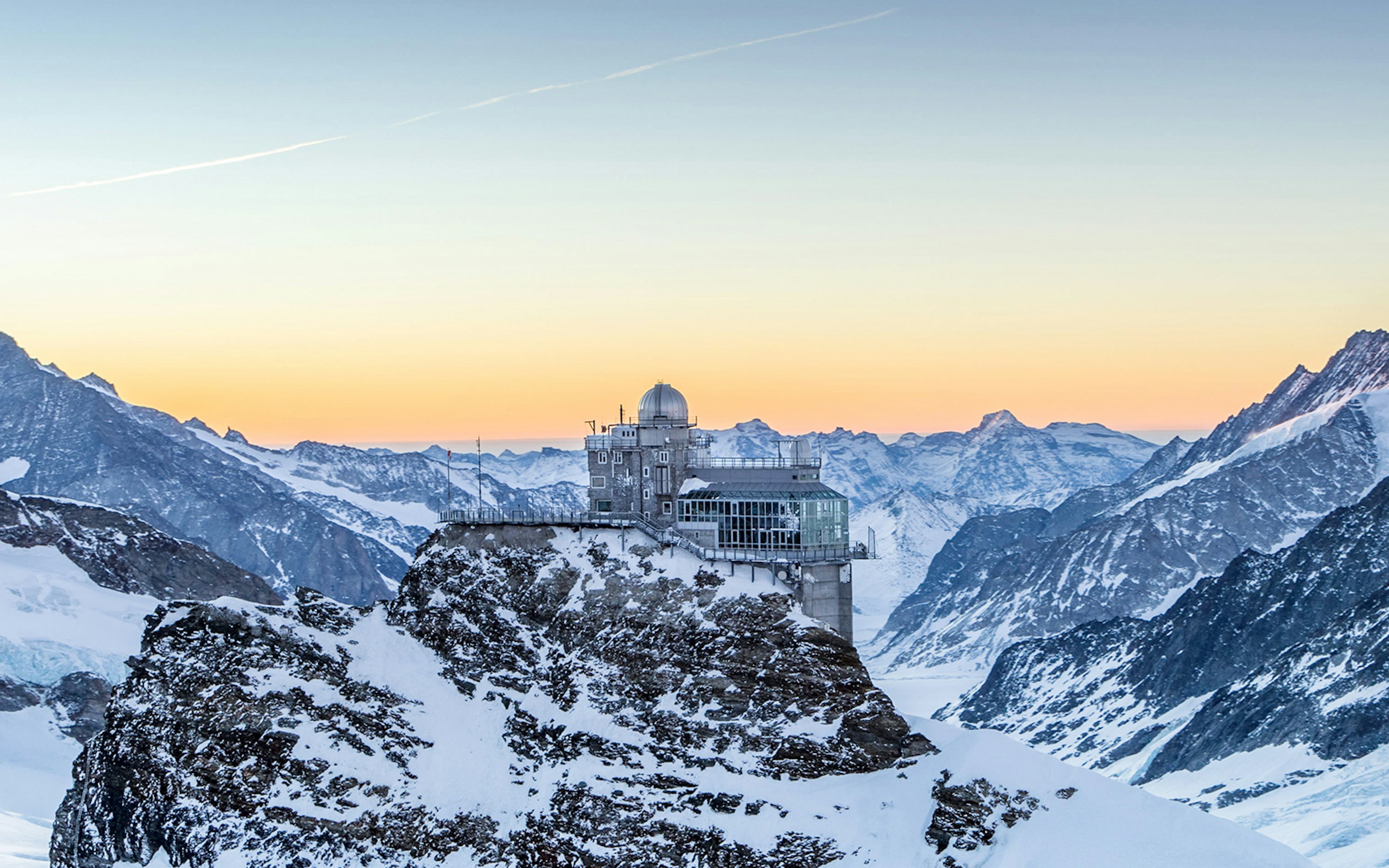
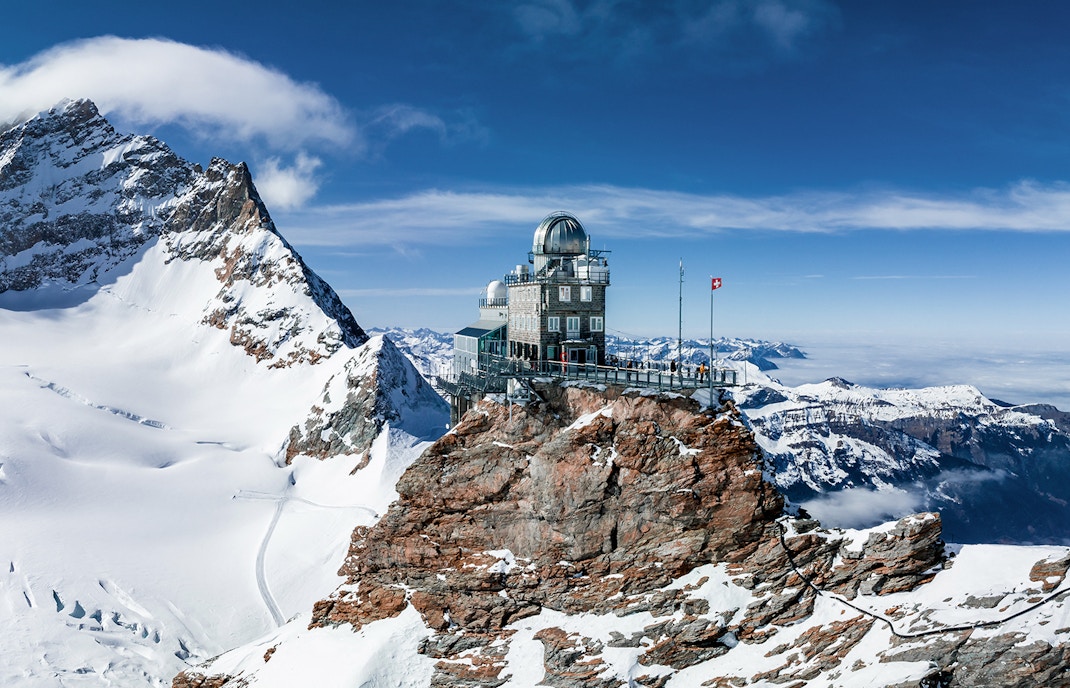
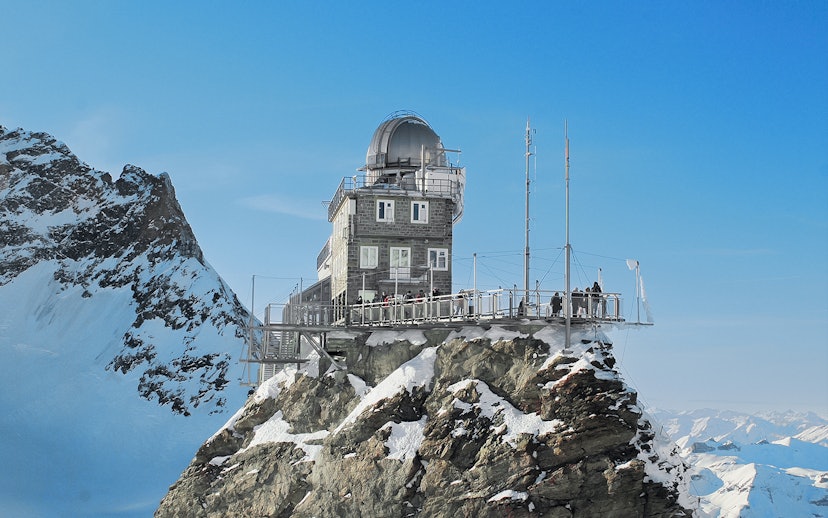
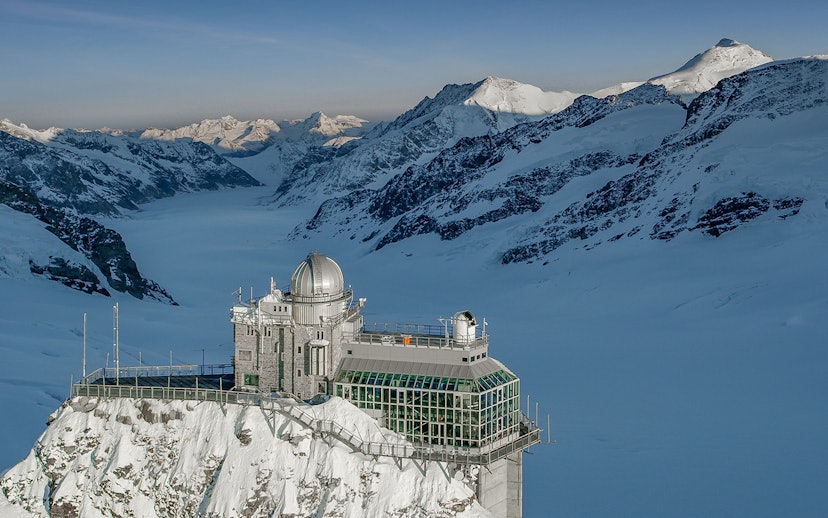
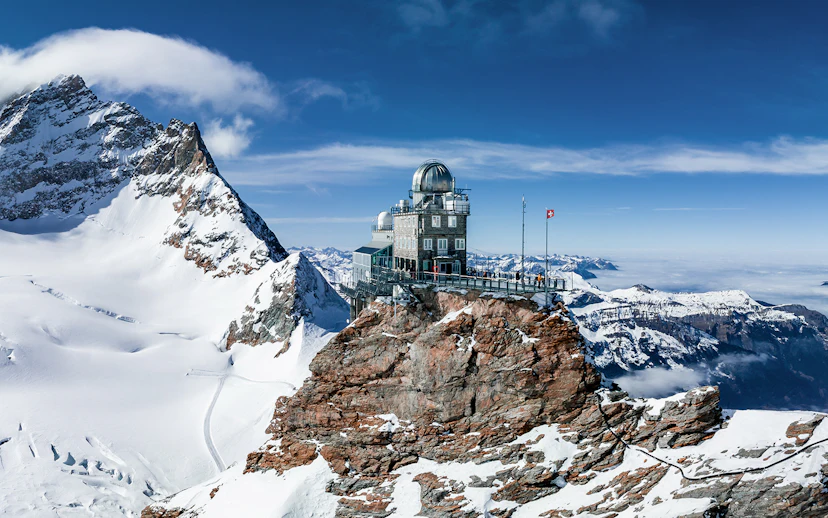
Sphinx Observatory atop Jungfraujoch in Swiss Alps with panoramic mountain views.
1/6

Sphinx Observatory

Attribute — Viewpoint: 3,571 m observation deck
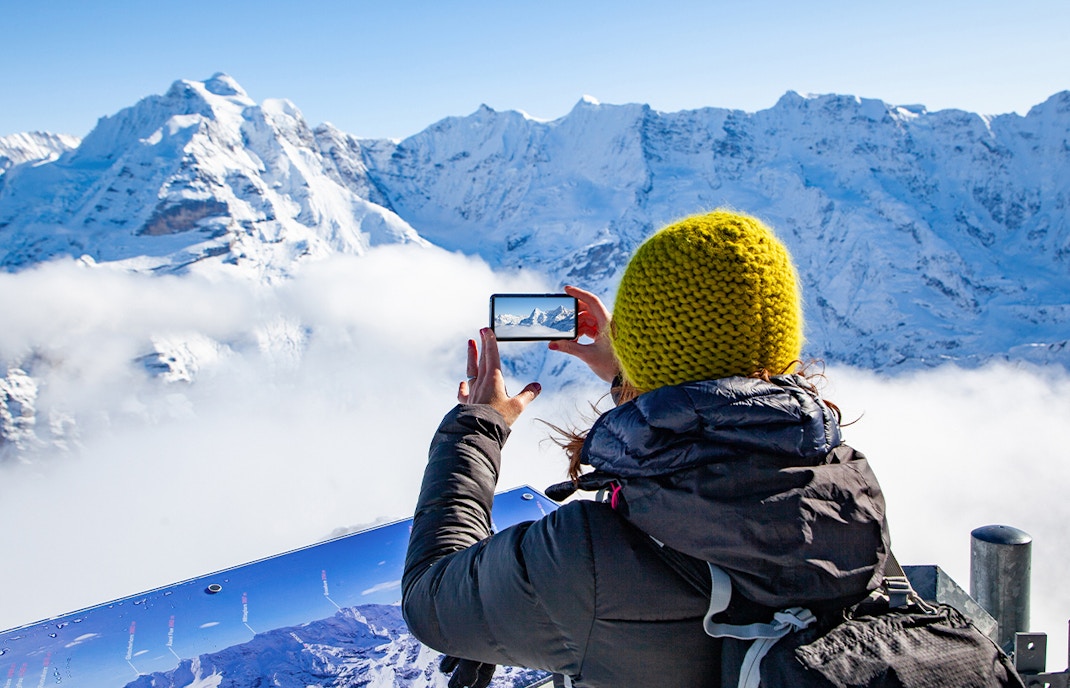
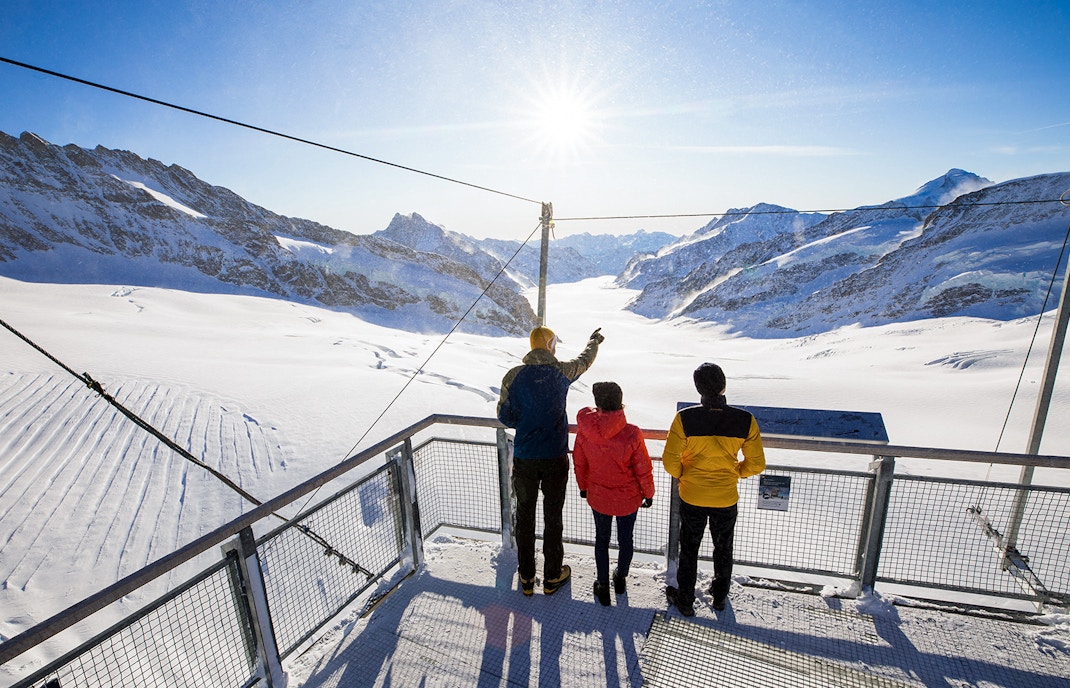
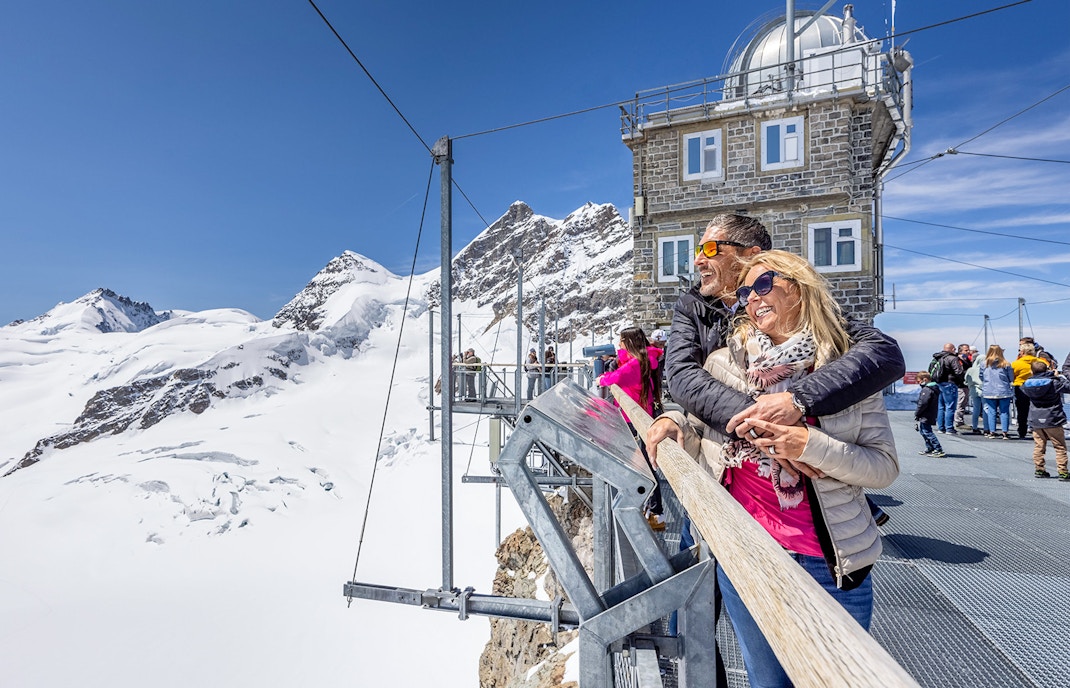
This is Jungfraujoch's signature stop and the reason most people come up in the first place: a high terrace looking over the Aletsch Glacier and the surrounding Bernese Alps. What many visitors miss is how quickly the platform gets congested once the late morning tour wave arrives, so the best photos usually come right after you reach the summit.
Where to find it: Take the lift from the main visitor complex to the highest panoramic terrace

Explore the Sphinx Observatory

Ice Palace

Attribute — Experience type: Glacier tunnel and sculpture gallery
The Ice Palace is carved inside the glacier itself, with blue-lit corridors and ice sculptures that feel more atmospheric than the short visit length suggests. Most people rush through it on the way to the next viewpoint, but the best details are in the side alcoves where the sculptures are easy to miss if you stay in the moving crowd.
Where to find it: Follow the signed indoor route from Alpine Sensation deeper into the glacier level

What's inside the Ice Palace

Alpine Sensation

Attribute — Experience type: Historical multimedia corridor
This tunnel adds the context that makes Jungfraujoch feel like more than a scenic stop, telling the story of the railway build and the workers who made it possible. Visitors often treat it as just a passageway, but the plaques and installation details are what turn the mountain trip into a proper story.
Where to find it: Between the Sphinx Hall area and the Ice Palace on the main circular route

Glacier Plateau

Attribute — Experience type: Outdoor snowfield and glacier viewpoint
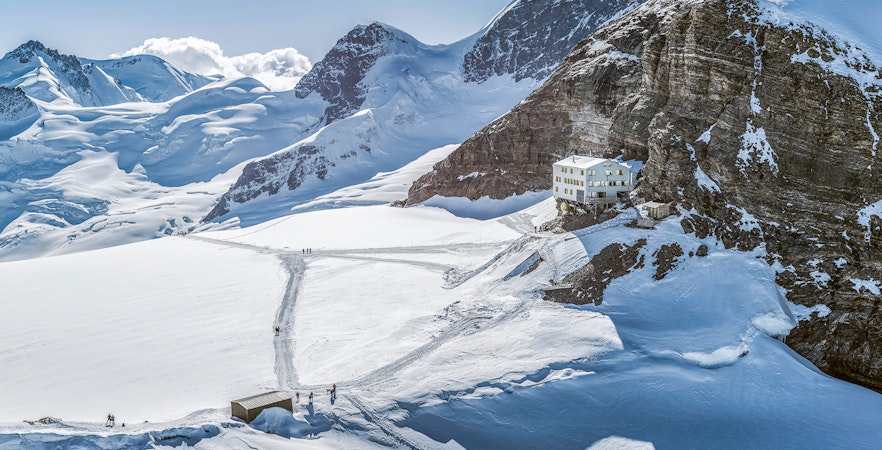
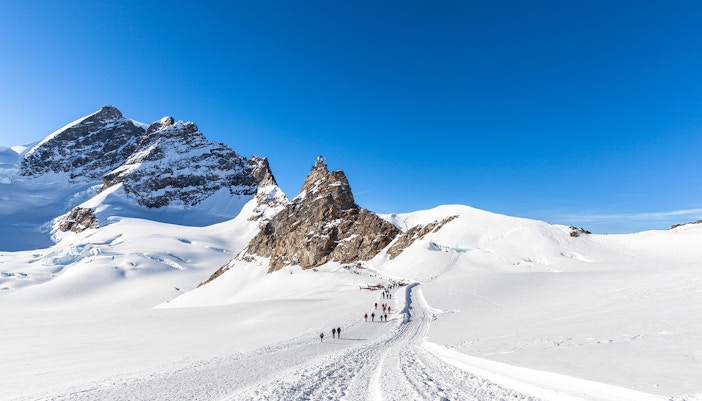
The Plateau is where Jungfraujoch feels most like a real high-alpine environment rather than a station complex, with open snow, mountain air, and direct glacier views. Many visitors only step out for a quick photo, but it is worth slowing down here because this is the most physical sense of being at 3,454 m.
Where to find it: Exit from the main indoor complex to the outdoor snowfield area near the summit buildings

Eismeer windows

Attribute — Experience type: Glacier viewpoint during the train journey
This is one of the best glacier views of the day, and it happens before you even reach the top. The stop is brief and easy to treat as a transition, but the cut-out windows into the rock face give you a dramatic look at the ice world most travelers only register after they are already back on the train.
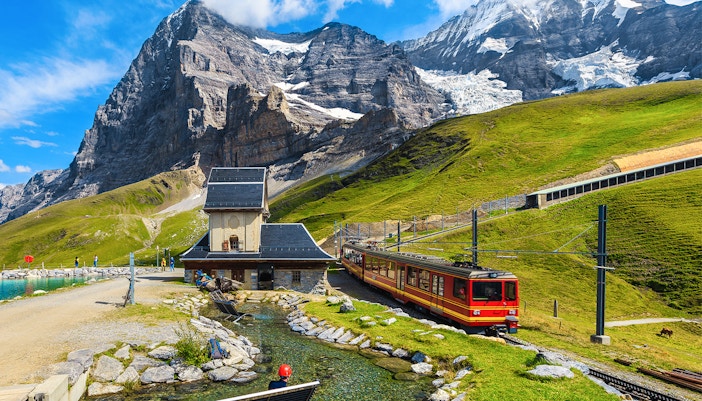
Where to find it: On the final Jungfrau Railway stretch, during the short stop at Eismeer station

Snow Fun Park

Attribute — Seasonal highlight: Summer snow activities
Open in the warmer months, this area adds tubing, sledding, and other snow-play options to a visit that otherwise stays mostly scenic. What people often miss is that it is not included in standard admission, so you should only budget time for it if you actually want the extra activity and weather is cooperating.
Where to find it: On the glacier outdoor area near the Plateau during the operating season

Check out the Snow Fun Park

Facilities and accessibility

  • 🎒 Bags: Carry only what you want at the summit, because the visit includes station changes, platform movement, and icy outdoor sections rather than a simple single-building stop.
  • 🍽️ Restaurants: Jungfraujoch has multiple on-site dining options, including a self-service restaurant and an Indian restaurant, which makes it practical to stay through lunch without descending.
  • 🛍️ Shopping: Lindt Swiss Chocolate Heaven is the easiest souvenir stop at the summit if you want a small, specific buy rather than generic last-minute shopping.
  • 🪑 Seating: The restaurants and indoor halls are the main rest areas, and they matter more here than at lower-altitude attractions because the air can leave you slower than expected.
  • 🩺 Altitude support: Take indoor breaks if you feel light-headed, because the best way to manage the altitude for most visitors is simply to slow down and sit for a few minutes.
  • Mobility: The Eiger Express route and most of the Jungfraujoch visitor complex are wheelchair accessible, though some station transfers and older railway sections may still require staff assistance.
  • 🧠 Cognitive and sensory needs: The calmest summit window is the first part of the morning, while the busiest and loudest period is late morning through early afternoon when guided groups cluster around the main lifts and terraces.
  • 👨‍👩‍👧 Families and strollers: Strollers are generally manageable on the main route and in the summit complex, but the visit still includes transfers, platforms, and weather exposure that make a compact stroller easier than a bulky one.
  • Route choice: If accessibility is a priority, the Grindelwald Terminal to Eiger Express route is usually the simpler way to reduce transfer time before the final rail ascent.

Jungfraujoch works best for children who will enjoy snow, trains, and big views, rather than hands-on exhibits for hours at a time.

  • 🕐 Time: With young children, 4–6 hours total is more realistic than a full all-day mountain plan, and the Ice Palace plus outdoor snow time are usually the best parts to prioritize.
  • 🏠 Facilities: On-site restaurants make it easier to feed children without rushing straight back down once they get cold or tired.
  • 💡 Engagement: Treat the ride up as part of the attraction, because the Eiger Express and cogwheel railway are often as memorable for children as the summit itself.
  • 🎒 Logistics: Bring warm layers, sunglasses, sunscreen, snacks, and a stroller cover, and aim for an early ascent before the biggest crowds build.
  • 📍 After your visit: Grindelwald is a better post-visit stop than staying high in the mountain zone if your children need room, warmth, and a lower-altitude reset.

Rules and restrictions

Bad weather can change the entire feel of the visit

⚠️ Even when trains are running, cloud and snow can wipe out the summit views completely. If your dates are flexible, book around the clearest forecast rather than treating Jungfraujoch like a weather-proof attraction.

Practical tips

  • Booking and arrival: Book as soon as you see a strong weather window in July or August, because the first departures are the ones that go first and they give you the best chance of clearer views.
  • Pacing: Go straight to the Sphinx when visibility is good, because you can always do the Ice Palace and Alpine Sensation later, but you cannot get a clear glacier view back once the clouds close in.
  • Altitude: Don't treat the first 20 minutes like a race; even fit travelers can feel the height here, and a slow first loop usually works better than trying to do everything at once.
  • Crowd management: The sweet spot is the earliest ascent from Grindelwald or Interlaken, since late morning is when the deck, lifts, and main corridors feel most compressed.
  • What to bring or leave behind: Bring warm layers, sunglasses, sunscreen, and shoes with grip; the combination of snow glare, wind, and slick indoor ice is what catches people out, not extreme walking distance.
  • Food and drink: Eat either early or after the main midday rush, because summit restaurants become a natural backup plan for almost everyone once the outdoor cold starts biting.
  • Full-route planning: Only add the Mönchsjoch Hut walk if the weather is stable and you still feel strong after the main summit loop - it is the easiest extra to overestimate at this altitude.

What else is worth visiting nearby?

Eat, shop and stay near Jungfraujoch

  • On-site: Jungfraujoch has several summit dining options, including Restaurant Bollywood, which makes it one of the easier Swiss mountain attractions for a full lunch stop instead of just a snack break.
  • Restaurant Bollywood: High at the summit complex: Indian food at mountain-top prices, but genuinely useful if you want a proper hot meal without descending early.
  • Self-service restaurant: In the main visitor complex: the most practical option if you want to eat quickly and keep moving through the route.
  • Grindelwald Terminal dining: Best after descent: a better choice if you care more about value than the novelty of eating at 3,500 m.
  • 💡 Pro tip: If you are visiting on a clear summer day, eat after the Sphinx and Plateau - the weather window matters more than beating the lunch line.
  • Lindt Swiss Chocolate Heaven: Swiss chocolate gifts and easy take-home souvenirs in the summit complex, and it is the most specific shopping stop people actually remember from Jungfraujoch.

No - not at Jungfraujoch itself. This is a day-trip destination, not a base. If you want the smoothest early start, stay in Interlaken, Grindelwald, or Lauterbrunnen instead, depending on whether you want transport convenience, mountain atmosphere, or the classic rail route.

  • Price point: Grindelwald and Lauterbrunnen usually feel more scenic but can cost more per night than broader Interlaken options.
  • Best for: Travelers who want to take the first ascent and avoid turning Jungfraujoch into a long same-day transfer from Zurich or Lucerne.
  • Consider instead: Interlaken for the broadest hotel range and easiest transport connections; Grindelwald for the fastest Eiger Express access; Lauterbrunnen if you want the traditional Wengen/Kleine Scheidegg railway route.

Frequently asked questions about visiting Jungfraujoch

Most visitors need 5–7 hours in total, including the journey up and down. If you are already staying in Grindelwald or Lauterbrunnen, you can trim that slightly, but the summit itself still deserves around 2–3 hours for the Sphinx, Ice Palace, Alpine Sensation, and outdoor glacier areas.

More reads